First-Due Operations
The first five minutes: size-up, Command, and the engine and truck work that decides the outcome.
FIRE TRAINING
FDTN’s quarterly training newsletter, mailed to every member: nuts-and-bolts material you can use at the next drill.
Before you train
The first 5 minutes on the fireground is what determines the eventual outcome. There’s a number of skills and tasks that need to be accomplished, many of them all at once, in order to bring things under control and solve the problem. How you perform during the first 5 minutes is directly related to prior training and preparation. We’ve all done training on hose stretches, searching, forcible entry, laddering and ventilation, and even Command. What we tend to shy away from is actually putting all those pieces together during training sessions so that we know how we’ll perform—as a group—when we arrive on the fireground.
Let’s take a quick look at what we know needs to happen on every fireground (we’ll use a working fire in a single-family residence as our example). The first-arriving company needs to perform an accurate size-up and relay that so the incoming apparatus know what is going on. If the size-up isn’t accurate, it’s usually downhill from the start. The second thing the first-arriving unit must do is establish Command. That’s right, like it or not it’s the responsibility of the first-arriving unit. Command can be fixed or mobile but it still needs to be established.
Now it’s time for the actual tasks (the ones we’d rather deal with) — water supply, attack line stretch and advance, forcible entry, laddering, search and rescue, horizontal and vertical ventilation, and overhaul and salvage. These skills are the ones we tend to practice over-and-over as individual tasks. What we don’t do enough of is practice them in fireground context. That means running some dry-run training sessions so that all personnel on OUR fireground know what they would/should be doing based on their order of arrival and the apparatus they arrive on. Simple stuff but stuff that seems to slip through the cracks a lot!
This session will review the basic skills and thoughts that should be driving the first 5 minutes of a working fireground. After a brief review the hands-on stations will run through the actions that companies would take. Everyone will rotate through the different positions to help them develop their overall fireground view.
- Review basics of Size-up by the first-arriving unit.
- Review the basics of establishing Command on arrival (and the ongoing use).
- Review the basic engine company functions critical during the first 5 minutes.
- Review the basic truck company functions during the first 5 minutes.
- Review the basic fireground benchmarks that should be met during the initial stages of any fireground operation — and the later benchmarks that wrap things up.
- Provide realistic, hands-on, training to develop confidence and proficiency at performing the initial company tasks during the first 5 minutes.
Training room/Apparatus floor
- Review the training plan with department members.
- Review any department procedures dealing with initial fireground operations including: Size-up, Command, Engine Company Operations, Truck Company Operations, Benchmarks.
- If you don’t have fireground procedures it would be a great time to start developing them.
Department tools & equipment
- Apparatus and equipment
Training site(s)
- As with most sessions, a training facility or acquired structure will provide the best results. Ideally you’ll be able to perform both engine and truck company operations including flowing water and venting.
- If you’re limited by facilities then at a minimum set up the stations at the firehouse and allow the crews to practice the skills in real time (even though the environment may be staged).
Training Props
- A few fire photos (local fires / buildings work best).
- A few reusable props: a forcible entry simulator, window venting simulator, roof vent simulator, and even a hallway hose stretching simulator. These let crews practice the skills they should be performing during the initial operations.
References: Stretching and Operating the First Line, FDTN · Fireground Search, FDTN · The Engine Company, PennWell · Truck Company Operations, PennWell
Three drills
Size-Up and Initial Command — Benchmarking
When arriving on the fireground you must be able to paint a verbal picture of what is going on so that all responding companies can see it through their radio. The point about size-up is to let responding companies know what you have, what you are doing, and what they should be thinking about/doing when they arrive. If you don’t paint the picture then they’ll be playing catch-up when they arrive!
Once you’ve given the size-up it’s critical that you establish a Command presence and operate as Command until your successor arrives (maybe a higher ranking officer, maybe a battalion or district Chief). Depending on the situation — and your actions — you may be Command throughout the entire event.
Once you’ve established Command and gone into action it’s critical to walk your way through the fireground using established benchmarks. Attach a word or phrase to the skills that you know are supposed to be done from start to finish. Entry made, primary search complete, water on the fire, ventilation performed, secondary search complete, cause determined, no extension, all companies accounted for—and whatever else you use on your fireground!
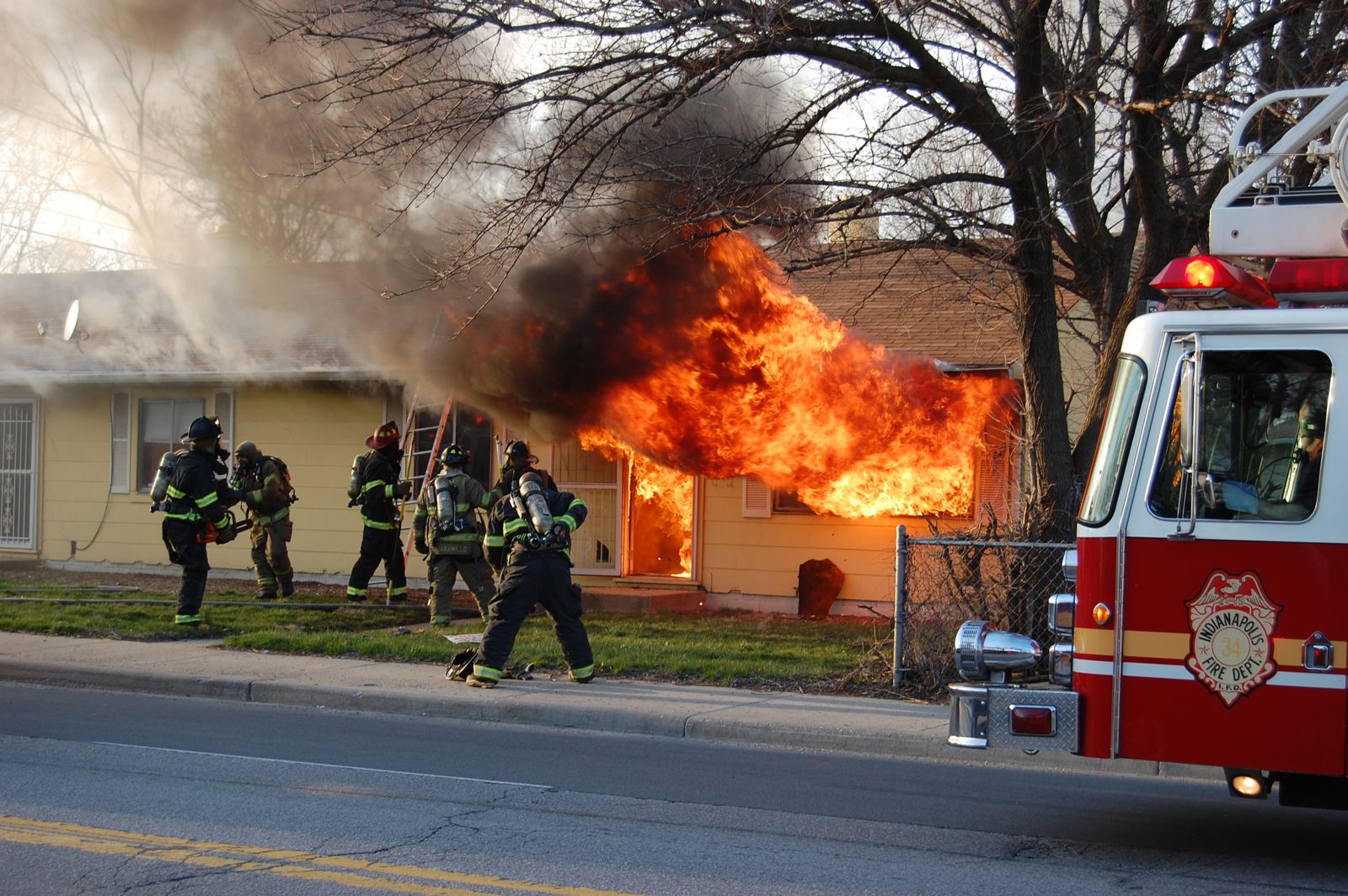
Given a series of photos (or single fireground image) each student will provide an initial size-up and establish Command for the image presented. Once Command is established the individual will list the fireground benchmarks that should be achieved (and who should be giving them) to bring the situation under control.
Engine Company Operations
We’ve practiced these skills over-and-over. The basic functions that an engine company should be performing on a working fire should be second nature. What tends to happen is that we lull ourselves into believing we’re ready to perform and then when it’s “GO” time we don’t execute.
You train to create instinctive reactions when you need them. You’re on an engine and arrive at a 2-story residence with fire showing from a single window on the second floor, A-side. This is a pretty simple operation and one that should generate, at the very least, the following: establish a sustained water supply, stretch and advance a charged attack line to the fire location, extinguish the fire, check for extension, have a back-up line stretched and ready to back up the primary attack line, overhaul the area.
Given a simulated bedroom fire in a single, or two-story, residence (or training building) perform a complete engine company evolution including: establish a supply line, stretch and advance an attack line to the fire location, operate the attack line, provide radio benchmarks of water on the fire, no extension, and loss stopped, or whatever you are currently using.
Truck Company Operations
Given the same scenario as the engine company above, perform the basic functions of a truck company at the simulated fire. At a minimum, force entry, perform a primary search, provide horizontal and vertical ventilation, perform a secondary search, check for extension and perform salvage and overhaul.
Same as Drill 2 for truck skills. Benchmark the searches, no extension, and overhaul complete.
Session outline
IThe Size-Up
- Why
- Set the incident into motion
- Advise the dispatch center of what you have
- Notify the other responding apparatus/personnel of the situation
- Who
- First-arriving unit officer
- All personnel should be performing their own basic size-up of the situation (more of a survival size-up)
- When
- Initial thoughts formed based on dispatch
- Formal size-up upon arrival
- Ongoing throughout incident — factoring in actions of companies
- What
- Address
- Type of building
- Fire conditions
- Initial actions (confirmation of what you should be doing)
- B.E.L.O.W. acronym
- Building type
- Extent and location of fire
- Life safety
- Occupancy
- Water supply
- Make it real — talk in real terms that everyone understands — if it’s a McDonald’s restaurant then say it’s a McDonald’s restaurant…
IICommand
- Why
- Establishes who is running the incident from the outset
- No leader equals no plan
- No plan equals no control over results
- Who
- Established by the first-arriving officer after the size-up
- May be assumed / transferred to another line officer and/or a chief officer
- Somebody must be in Command throughout the entire operation
IIIEngine Company Basics
- Position for optimal stretching with consideration for the truck company
- Water supply
- Establish sustained water from the outset — may be first engine or second engine — follow procedures
- Consider a backup supply
- Attack line
- Have options — length, size
- Have assignments — nozzleman, backup man
- Guide the stretch — don’t stretch blindly and gamble at finding the fire, know where it is
- Backup line
- Always establish one
- Know who will be stretching and advancing it
- More lives have been saved by properly stretching and operating the first line than by any other tactic!
IVTruck Company Basics
- Position for optimal use of aerial device, if needed
- Forcible entry
- Know when it’s needed and what tools it will take
- Make sure the tools make it to the location needed — from the outset
- Search
- Perform a quick search size-up and determine if there are actual victims
- Types of potential victims
- Known — direct knowledge (first-hand)
- Reported — indirect knowledge (second-hand)
- Suspected — possible (no first- or second-hand knowledge)
- Ventilation
- Vent the fire area to help the engine / search teams
- Vent the building to slow / stop fire growth
- Horizontal and vertical depending on need
VBenchmarks
- Size-up starts the event
- Arrival on scene — every unit should announce arrival so others know they are there and so that tasks tied to order of arrival are confirmed
- Water on the fire
- Primary search complete
- Secondary search complete
- Roof opened (if applicable)
- Extension check (present or not)
- Fire under control
- Cause determined
- Loss stopped (no further damage)
- Crews accounted for
- Command terminated
- There may be many more benchmarks that you use — make sure that all personnel know what benchmarks are required and who is responsible for providing them
VIThe Tailboard Review
- ALWAYS perform a brief review on the fireground
- May be company-based only or it may involve multiple companies
- Within each company review what each member did — a great learning tool for all company members
VIITraining
- Perfect practice makes perfect
- Skills training must lead into operational training
Quick check
1The initial size-up on the fireground is performed by:
2When using the BELOW acronym as a guide for size-up, the B refers to:
3When using the BELOW acronym as a guide for size-up, the W refers to:
4Command is established to:
5What fireground tactic has saved more lives than any other:
6When identifying potential victims, a KNOWN victim is referred to when you:
7When identifying potential victims, a REPORTED victim is referred to when you:
8You should always perform a brief tailboard review after every fire:
First-Due
By Bob Pressler, Lieutenant (retired), FDNY
You are the officer of the first-arriving engine company for this fire. As you proceed down the street toward the address, smoke is visible rising into the afternoon sky. The chief reports that he will be delayed, so the fire is yours to run. The initial response to this incident is two engines and one truck company, with a total of 12 firefighters.
30-Second Size-Up
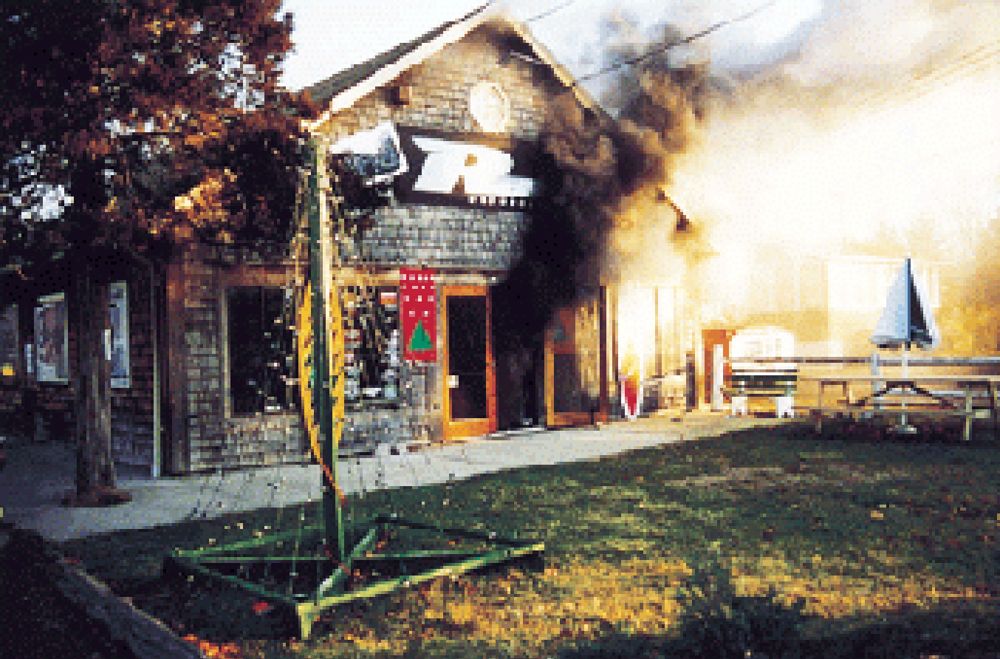
Your initial size-up should show a 1½-story, wood-frame structure approximately 30 feet wide and 50 feet deep. Immediate forcible entry will not be a problem, as the front door is wide open. The building is occupied by some type of recreational surf and snowboard business, which is evident by the advertising signs visible on the front of the building. The building is newer looking, and there is a strong possibility that the roof assembly is constructed of lightweight wood trusses. The fire’s location is not easily determined from the exterior, but most fires in commercial occupancies start toward the rear where the utilities and work areas are often located. The heavy, dark smoke indicates an advanced fire and that you should summon additional help.
By using the rule ADULTS for handline selection, you find that you are unable (U) to determine the fire area, and you may be dealing with one (L) large, uncompartmented fire area. These two factors suggest that a 2½-inch handline should be stretched to attack this fire. The larger handline gives needed fire flow, reach, penetration, and knockdown capabilities while affording the crew protection. Accordingly, you will order the first engine company to stretch a 2½-inch handline to the front door.
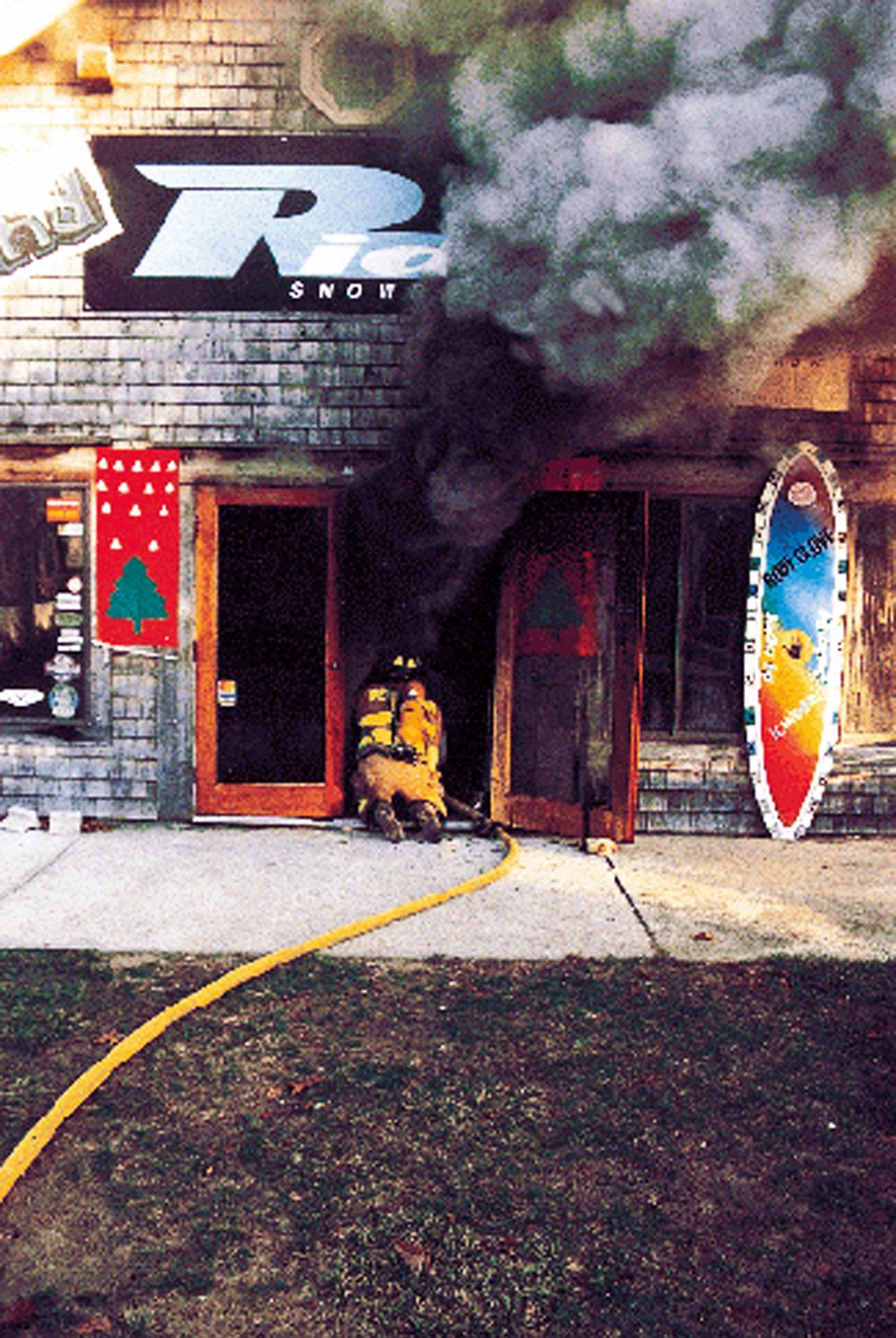
There are two different schools of thought as to where you should be positioned as initial IC. One says stay at the front of the fire building, establish a command post, remain there until relieved by a higher-ranking officer, and then meet up with your company. Another says give the initial size-up on arrival and remain with your company for firefighting operations. The level of experience and training of your company officers will determine which option you choose. In a well-trained fire department, the officer may stay with his crew, as the second- and third-arriving officers will be able to see the tactics he has already employed and do what is necessary to support them. Letting the officer remain with the company usually ensures that the line will get advanced to the seat of the fire.
If you decide to stay with the handline, certain things must be covered while the line is stretched and charged. You should take a quick look at as many sides of the building as possible; by going to both front corners, you see three sides of the building and determine how deep the building is.
You must also ensure that you have or your chauffeur will establish a water supply. Some departments operate off booster tank water while water supply is being established. This tactic is up to individual departments and is based on many factors, including fire size, booster tank size, time of the second engine’s arrival, hydrant locations, and experience of the firefighters operating the handline. Whether you drop your own feeder line or are to be supplied by the second engine, your chauffeur should notify you when he has hydrant water.
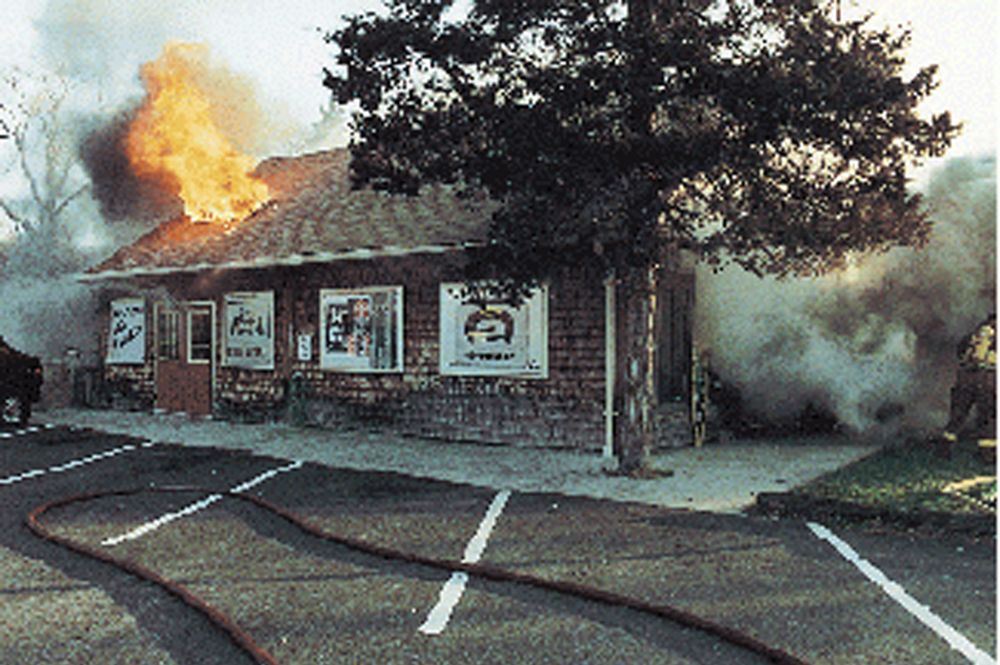
On arrival, truck company personnel must look to support the engine company’s advance. They should look to perform horizontal ventilation both front and rear and report back to you on conditions on the side(s) of the building that you have not seen or on any changes in conditions that will affect the attack.
At this fire, two skylights in the rear of the building on the exposure two (B) side of the building have self-vented, and fire is roaring 10 feet over the roofline. The location of the main body of fire inside the building is now known.
The truck company should also have spotted the side doors that are directly under the venting fire. These doors should now be forced, and if the engine company is having trouble advancing through the occupancy, a second line may be able to be brought in through this entrance to attack the fire. If this back door is used, the interior crews must be notified before water is started so that they can withdraw to an area of safety.
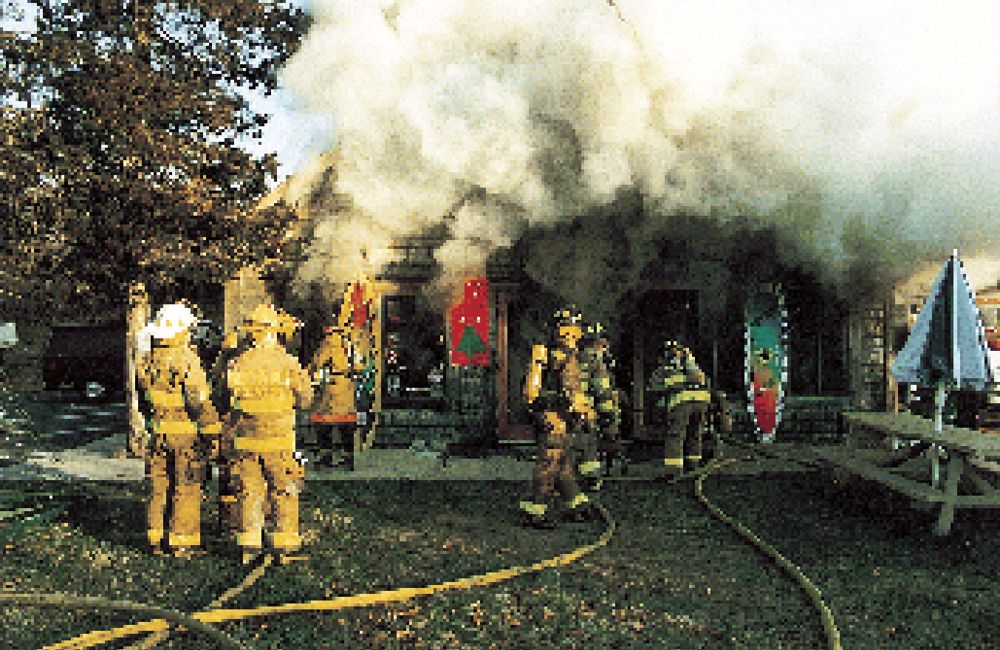
At this fire, the second line was stretched to the front door to back up the first line’s position. Some horizontal ventilation has been performed, but due to the visible decals on the front windows, the entire glass panes were not removed. The second half of the front door is still in the closed position, and this should be forced open before the second line proceeds into the fire building. This will give both companies a larger area to back out through in case conditions deteriorate.
Two members of the truck company, the inside team, should join with the advancing engine crew and perform searches as the line advances. These firefighters should also open some examination holes in the ceiling to check for extension in the attic area above the advancing engine.
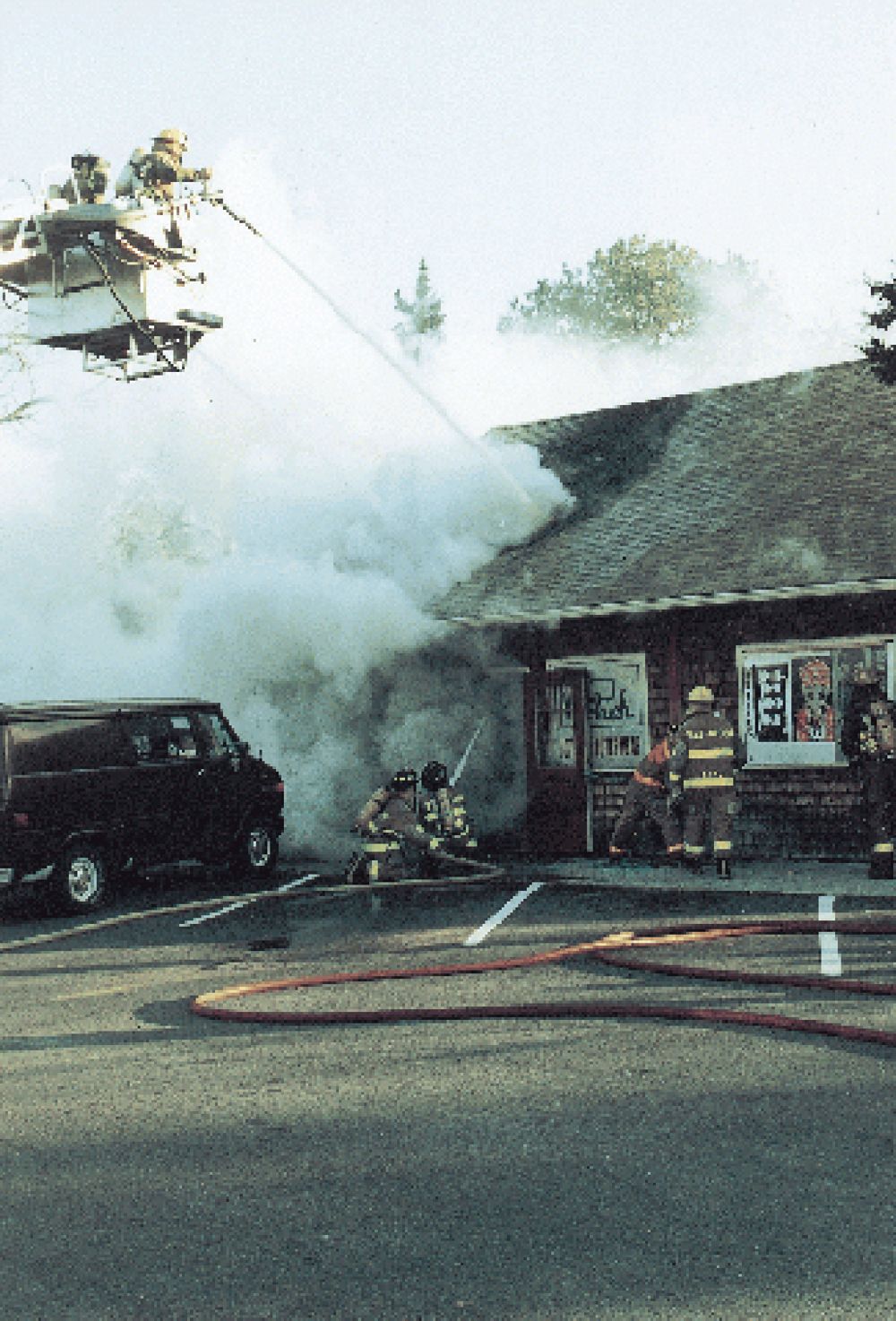
As additional resources arrive, a third handline is stretched and the tower ladder is supplied. Because the inside teams were not able to advance through the store to the fire area, the third line was used through the rear doors, and the fire was darkened down.
The master stream was also used on the tower ladder but through the skylights. Use extreme care when operating streams into ventilation openings. This practice only serves to prevent the fire from venting and usually will spread the fire throughout the area under the vent area. At this fire, the tower ladder bucket might have been used from ground level and the stream directed through the side doors and up into the involved attic area.
Lessons Learned
Size-up is an ongoing process that starts with receipt of the alarm and continues until the fire is extinguished or the building burns down. The IC must be able to evaluate new information, such as the self-venting skylights, and change the attack plan accordingly.
Handline size should be based on fire conditions, and all personnel must know when to stretch what size line. Too small an initial handline will only let the fire increase in size and spread farther into the structure.
When dealing with buildings that may have lightweight roof components, a decision should be made early in the attack as to whether roof ventilation will be required and if it is safe enough for firefighters to perform it. A heavy smoke condition or advanced fire in the attic space should influence the IC’s judgment. When in doubt, don’t send them out. If operations are to be performed, use all natural openings provided, like these skylights, or cut the roof and then abandon the roof positions.
Do not operate outside streams into ventilation openings. This only tends to spread the fire. Windows that are vented to assist the engine’s advance should be completely cleaned out for maximum air movement. All door openings should also be made as wide as possible to facilitate firefighters’ moving through them.
FDTN Membership
Individual Membership
- Your own copy of FIRE TRAINING, mailed quarterly
- FDTN email news and training updates
- Coming soon: FDTN online training articles
Department Membership
- A new Department Trainer every quarter: the full session online, slide deck, mini book, drill cards and test
- Online login for your department, with recent Trainers kept on hand
- FIRE TRAINING, FDTN’s quarterly newsletter
The Department Trainer comes with Department Membership only. Full membership details.
FDTN Department Trainer